


You know that feeling when you watch your mom’s hand shake while she’s trying to pour coffee? Or when your grandpa calls you by your brother’s name—again? It stings, doesn’t it? You stand there wanting to fix it, but you don’t even know where to start.
Here’s the thing: neurological diseases affect more than a billion people around the world. That’s not just a stat—it’s grandparents, parents, friends, even young people just starting out. And while these conditions can turn simple stuff like buttoning a shirt or remembering what you had for breakfast into real struggles, there’s something that helps more than you’d think. Information. Clear, honest information that doesn’t drown you in doctor-speak.
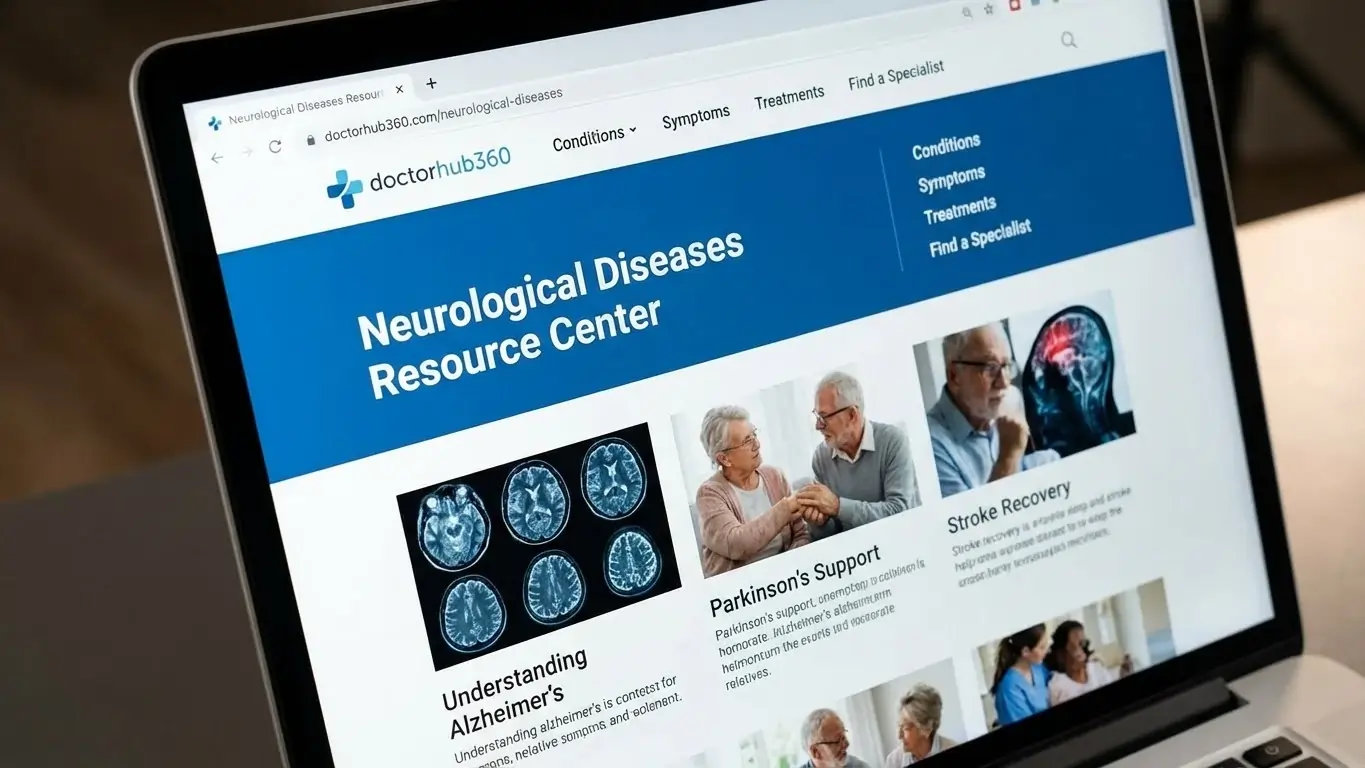
That’s what doctorhub360.com neurological diseases is all about. It cuts through the confusion and gives you what you actually need—explanations that make sense, practical advice you can use today, and a bit of hope when things feel heavy.
Let’s dig into this together. What are these diseases? Which ones show up most? Why do they happen? And what can you actually do about them?
So What Are We Really Talking About Here?
Think of your nervous system as your body’s command center. Your brain’s calling the shots, your spinal cord’s running the cables, and millions of nerves are carrying messages everywhere—telling your legs to walk, your lungs to breathe, your heart to beat. When something throws off that system, you’ve got a neurological disease.
Sometimes it hits fast, like a stroke that changes everything in minutes. Other times it’s sneaky—Alzheimer’s stealing bits of memory so slowly you barely notice at first. Some conditions get steadily worse. Others flare up, back off, then flare up again.
The earlier you understand what’s happening, the better you can handle it. And that’s where doctorhub360.com neurological diseases comes in handy—it explains all this stuff without making you feel like you need a medical degree.
The Heavy Hitters: Diseases You’ve Probably Heard About
Let’s talk about the ones that keep popping up. Resources like doctorhub360.com neurological diseases break down each condition so you can spot the warning signs early.
Alzheimer’s Disease
This one’s brutal because it moves quietly. It steals memories first, then thinking skills, then the person you knew. It’s behind most dementia cases.
What does it look like?
- Your dad forgets the conversation you just had
- Your aunt gets lost driving to the grocery store she’s been going to for 30 years
- Simple tasks—like paying bills or following a recipe—suddenly feel impossible
- Mood swings come out of nowhere, or they pull away from people they used to love seeing
Sure, it usually shows up in older folks. But younger people? They can get it too. Early-onset Alzheimer’s is a real thing, and it’s heartbreaking.
Parkinson’s Disease
When the brain cells making dopamine start dying, movement gets messy. We’re seeing more and more of this.
Watch for:
- That classic tremor—usually when they’re resting, not moving
- Everything slows down. Walking. Talking. Even facial expressions.
- Balance goes wobbly
- Their voice gets softer, their face less animated
It often starts on one side of the body, then spreads across.
Multiple Sclerosis (MS)
Here’s where the body turns on itself. The immune system attacks the coating around your nerves, and signals get scrambled.
Common stuff people notice:
- Tingling or numbness creeping through arms and legs
- Exhaustion that heat makes way worse
- Vision goes blurry or double
- Muscles get weak or start spasming randomly
MS loves hitting people in their 20s and 30s. Symptoms come, go, come back—it’s unpredictable, which makes it extra tough.
Epilepsy
Seizures. That’s what epilepsy means—recurring seizures from weird electrical storms in the brain.
They don’t all look the same:
- Some people have full convulsions, the kind you see in movies
- Others just stare off into space
- Sudden confusion that passes quickly
- Jerking movements in one part of the body
Some seizures are so subtle you’d miss them if you weren’t paying close attention.
A Few More Worth Knowing
- Migraines — Way more than just a headache. We’re talking throbbing pain, nausea, light that feels like knives.
- Stroke — Blood flow to the brain stops or slows. Suddenly you can’t move one side, can’t speak right, can’t think straight.
- ALS — Muscles gradually weaken as motor neurons die. You lose control bit by bit.
Here’s the tricky part: a lot of these share symptoms. Feeling tired? Losing balance? That could be MS, or Parkinson’s, or something else entirely. Don’t play doctor with yourself. Get checked out.
Why Does This Happen to People?
Wish there was one simple answer, but there usually isn’t. It’s more like a perfect storm, and doctorhub360.com neurological diseases helps you understand all the factors at play:
- Family history — Some conditions, like Huntington’s, run in families like a bad inheritance.
- Getting older — Parkinson’s and Alzheimer’s tend to show up after 60. Not always, but often.
- Injuries — Bang your head hard enough, and problems can follow years later.
- Infections or toxins — Certain viruses mess with your nervous system. So do some chemicals.
- Your body attacking itself — That’s MS in a nutshell.
But here’s what matters: lifestyle plays a role too. Smoking, eating junk, sitting around all day—they all nudge the risk higher. The flip side? You can change those things. Not everything’s out of your control.
Getting Answers: Diagnosis and What Comes Next
A neurologist will usually start with the basics—asking questions, checking reflexes, testing balance. Then come the bigger guns:
- MRI or CT scans to look inside your brain
- EEG to watch brain waves
- Blood tests to rule out other stuff
- Nerve conduction studies if they need more details
Now for the hard truth: most of these don’t have cures. Not yet, anyway. But we’ve got treatments that can slow things down, ease symptoms, help you keep doing what matters. Platforms like doctorhub360.com neurological diseases offer detailed guides on each treatment option so you know what to expect.
- Medications — Stop seizures, boost dopamine, slow Alzheimer’s a bit.
- Therapy — Physical therapy keeps you moving. Speech therapy helps communication. Occupational therapy teaches workarounds for daily tasks.
- Lifestyle changes — Exercise, better food, less stress. Simple stuff that actually works.
- Advanced options — Deep brain stimulation for Parkinson’s. Nerve stimulators for epilepsy.
Treatment Breakdown
| Condition | Key Meds | Other Help | Daily Wins |
|---|---|---|---|
| Alzheimer’s | Drugs to boost brain chemicals | Memory exercises, support groups | Do puzzles, stay social, keep routines |
| Parkinson’s | Dopamine boosters | Physical therapy, sometimes surgery | Walk daily, eat balanced meals |
| MS | Immune-modulating drugs | Steroids for flare-ups, rehab | Stay cool, track vitamin D |
| Epilepsy | Anti-seizure meds | Special diets, nerve stimulation | Sleep well, know your triggers |
Can You Stop It Before It Starts?
You can’t prevent everything. But you can stack the odds in your favor. Doctorhub360.com neurological diseases provides prevention strategies that actually fit into real life:
- Keep moving — Even a 20-minute walk pumps blood to your brain.
- Eat real food — Veggies, fruits, fish, nuts. Your brain runs better on good fuel.
- Protect your head — Wear helmets. Use seatbelts. Don’t mess around.
- Handle the other stuff — Keep blood pressure, blood sugar, and cholesterol under control.
- Use your brain — Read. Learn guitar. Play chess. Try new things.
- Sleep and chill out — Both protect your brain more than you’d think.
Start with one thing. Just one. Then add another. Those little habits? They build up into serious protection.
Living with It: For You and Everyone Around You
These diseases don’t just hit one person. They ripple out to everyone who cares. Whether you’re dealing with this yourself or supporting someone who is, doctorhub360.com neurological diseases offers tools and communities that make the journey less lonely.
If you’re the one diagnosed:
- Track what’s happening with apps or a notebook
- Find online groups where people get it
- Make plans now for what you might need later
If you’re the caregiver:
- Take breaks. Seriously. Burnout helps no one.
- Look into respite care—even a few hours makes a difference
- Talk about how you’re feeling. Don’t bottle it up.
The platform at doctorhub360.com neurological diseases connects you with symptom trackers, support forums, and expert advice that helps both patients and caregivers manage day-to-day challenges.
Questions People Actually Ask
What are the first signs something’s wrong?
Early clues often include memory slips, shaky hands, balance problems, or exhaustion that won’t quit. If these things keep happening or get worse, don’t wait. Talk to a doctor.
Can these diseases be cured?
Most can’t be cured yet, but lots of them respond well to treatment. And research keeps moving forward—new options pop up all the time.
How does technology help?
Apps track your symptoms. Telemedicine connects you with specialists from your couch. Sites like doctorhub360.com neurological diseases give you reliable info 24/7—making care easier and faster.
Is exercise really helpful if you’ve already got one of these conditions?
Absolutely. Movement helps strength, mood, and can actually slow progression. Just check with your doctor first to figure out what’s safe for you.
You’re Not Facing This Alone
Neurological diseases are tough. They change lives, mess with plans, test limits. But here’s what I’ve seen: people keep going. They adapt. They find new ways to do things. And with solid information and real support from resources like doctorhub360.com neurological diseases, they often come out stronger than they thought possible.
If something feels off—if your hands won’t stop shaking, or names keep slipping away, or balance isn’t what it used to be—reach out. Early action matters more than you know. You’re not alone in this, and platforms like doctorhub360.com neurological diseases are there to help every single step of the way.
Take care of your brain. It’s the only one you’ve got, and it’s worth protecting.
