


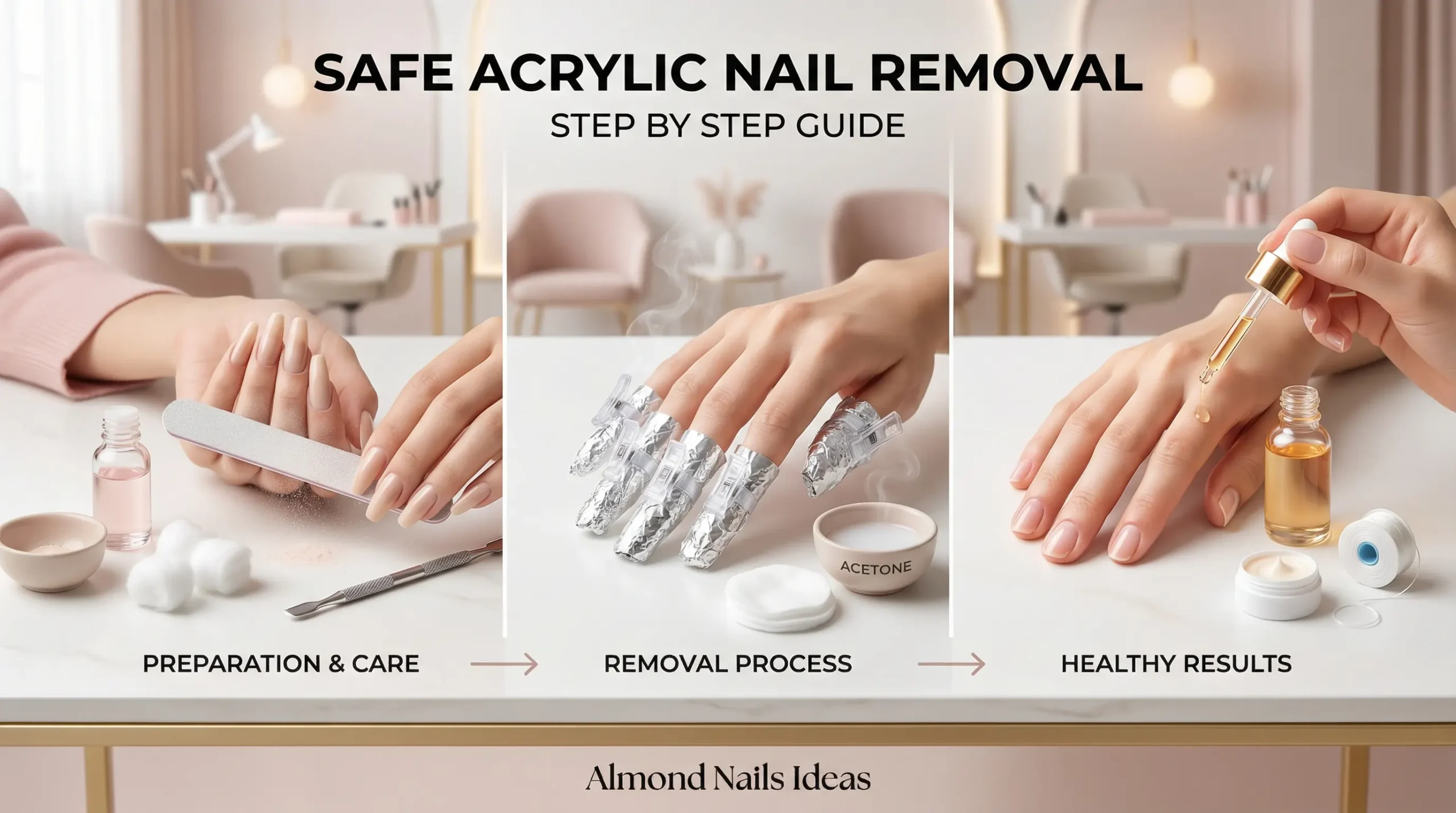
If you are wondering how to remove acrylic nails, you are not alone. Many people in the USA love wearing fake nails because they look stylish and give confidence. However, taking them off incorrectly can cause nail damage. Removing acrylics safely protects your natural nails while avoiding pain. This article will guide you step by step, showing both at-home methods and advice on when to see a professional nail technician.
Understanding how to remove acrylic nails is essential for nail health. Doing it wrong can lead to brittle nails, peeling, or infections. By following simple techniques, you can enjoy your nail extensions without harming your fingers. Let’s explore the tools, methods, and aftercare tips that will help your nails stay strong and healthy.
What Are Acrylic Nails and Why Do People Use Them?
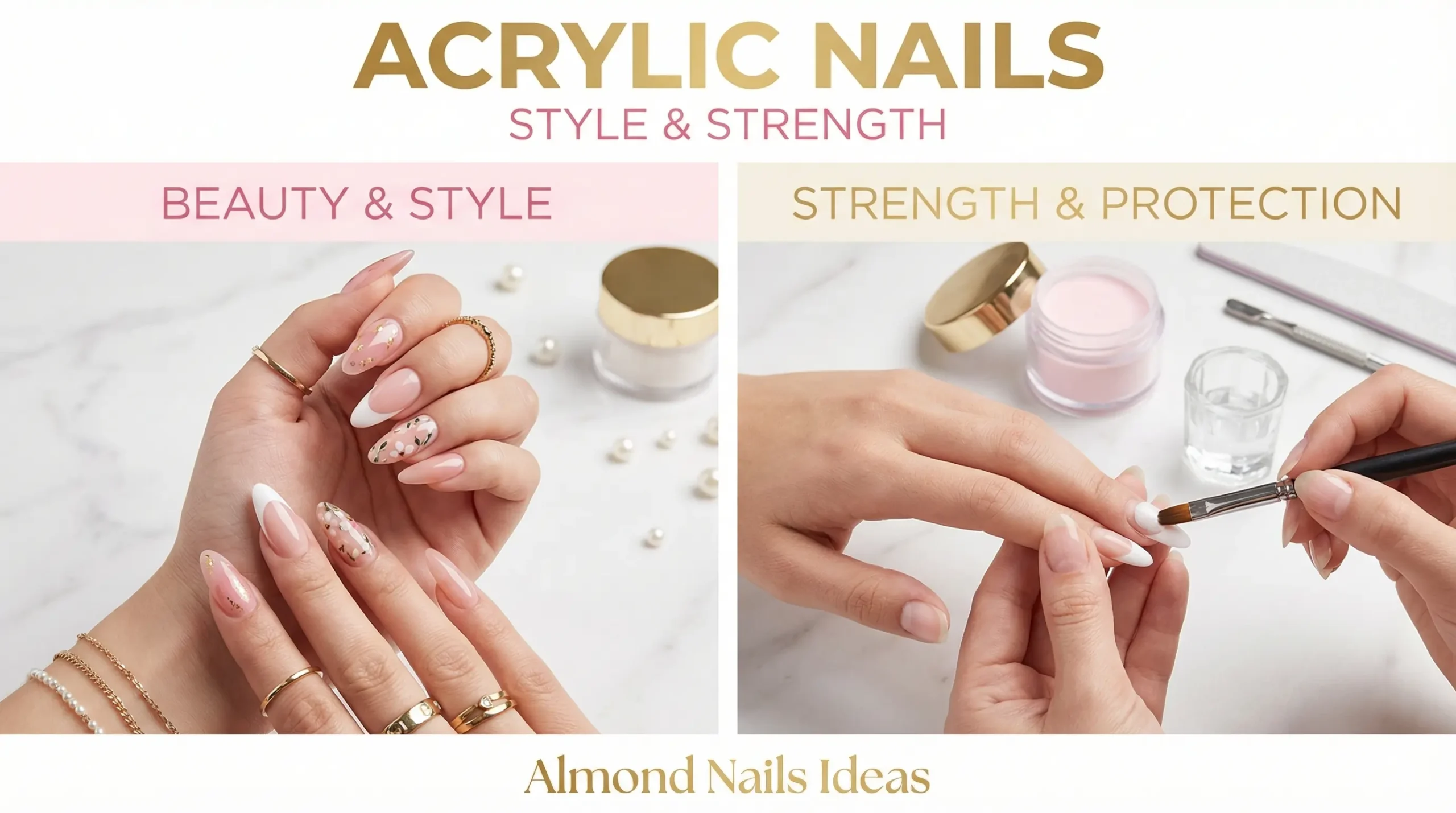
Acrylic nails are a type of nail enhancement made from a mixture of liquid monomer and powder polymer. When applied, they form a hard layer on top of your natural nails, giving length and strength. Many Americans use acrylic nails for fashion, events, or even to protect weak nails. They can be decorated with nail art, gel polish, or nail extensions. However, despite their beauty, acrylic nails require careful removal to prevent nail damage.
The main appeal of fake nails is their durability and versatility. They can last several weeks if applied properly. But improper removal can weaken your nails and cuticles. Understanding what acrylic nails are, and why they are popular, helps you make better choices when it comes to maintenance and safe removal.
Things You Need Before Removing Acrylic Nails
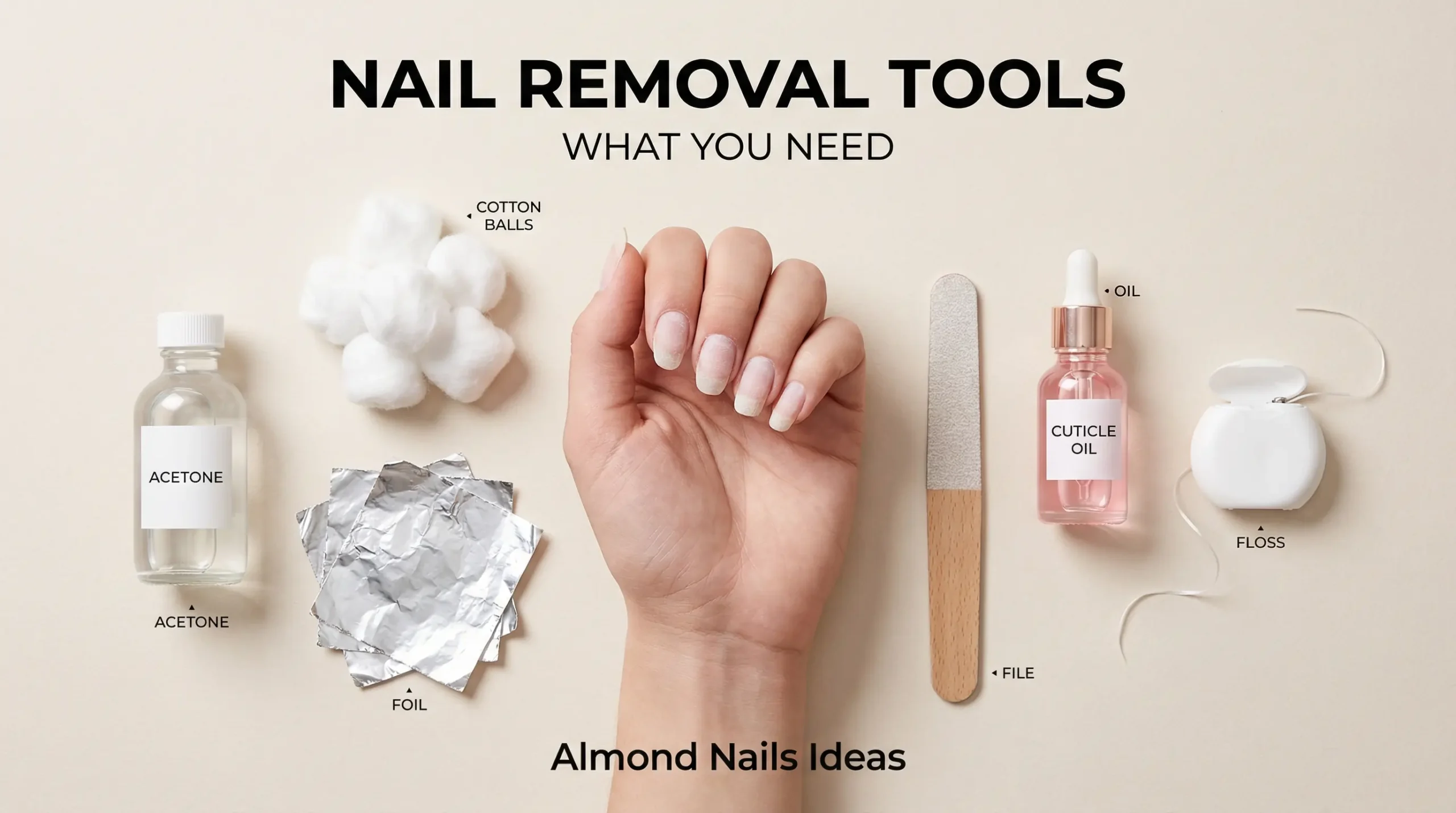
Before learning how to remove acrylic nails, it is crucial to prepare the right tools. You will need acetone, cotton balls, aluminum foil, a nail file, cuticle oil, and sometimes dental floss. Preparing these supplies ensures the removal process is safe and effective. Safety is important because improper removal can cause brittle nails, nail peeling, or even minor infections.
Having the correct tools allows you to perform a proper acetone soak, gently filing the surface without causing nail damage. A small table can help organize these materials:
| Tool | Purpose |
|---|---|
| Acetone | Dissolves acrylics efficiently |
| Cotton balls | Absorb acetone for soaking |
| Aluminum foil | Holds cotton in place during soak |
| Nail file | Buffs and smooths nail surface |
| Cuticle oil | Moisturizes nails after removal |
With these tools ready, you can safely follow the steps to remove your acrylic nails at home without damaging your natural nails.
How to Remove Acrylic Nails at Home – Step by Step
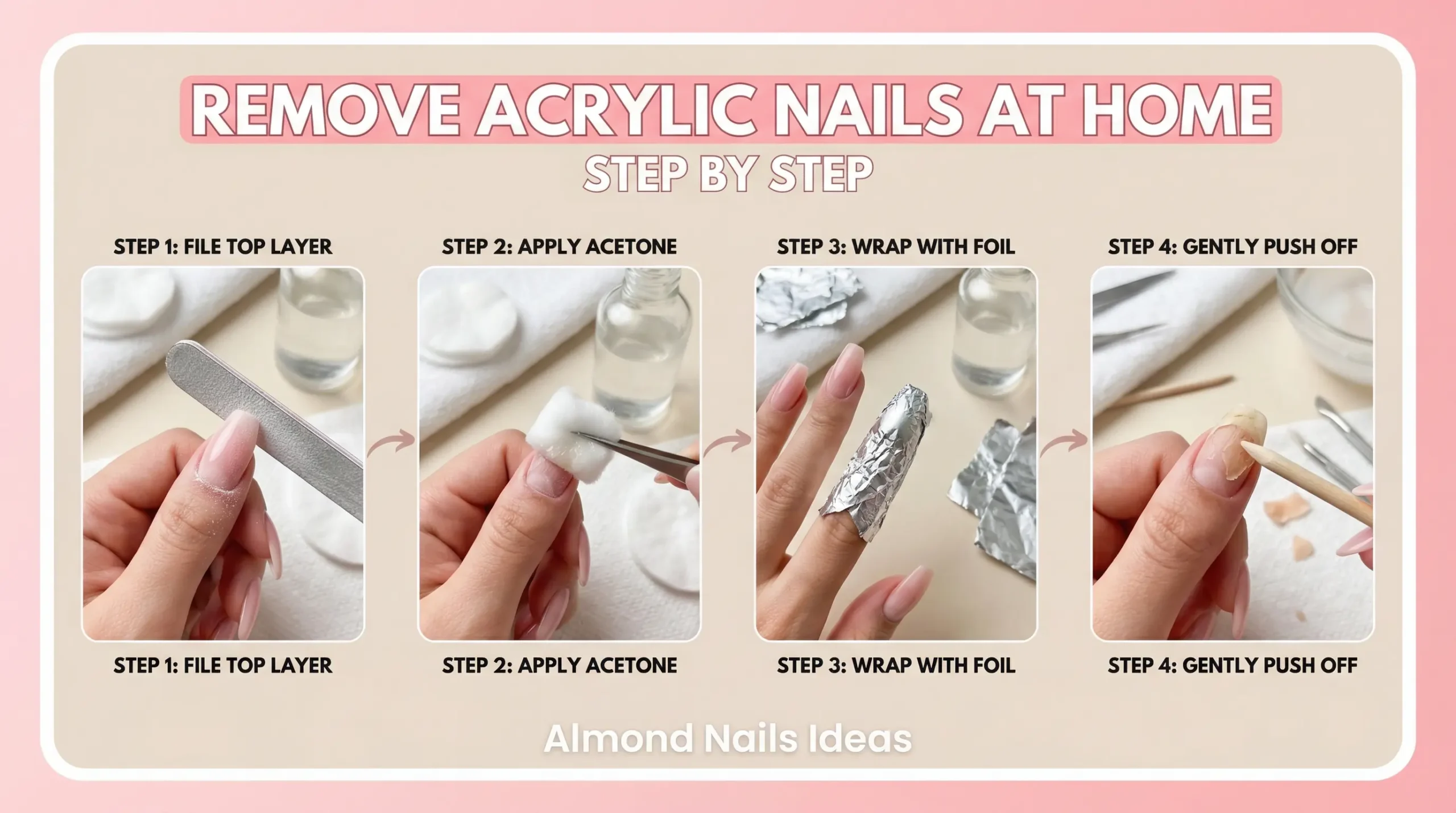
Learning how to remove acrylic nails at home can save you money and protect your nails. First, gently file the top layer of the acrylic to break its shine. This helps acetone penetrate faster. Next, soak a cotton ball in acetone and place it on your nail. Wrap the nail with aluminum foil to keep it secure. Wait 15–20 minutes for the acrylic to soften. Finally, gently push off the acrylic using an orangewood stick or cuticle pusher.
Many Americans prefer at-home methods because they are convenient. Using acetone soak avoids pulling and reduces the risk of nail damage. You can also apply cuticle oil afterward to strengthen your natural nails. Following these steps ensures that your nails remain strong, smooth, and ready for their next style or treatment.
How to Remove Acrylic Nails Without Tools or Acetone
Sometimes, you may not have acetone or tools available. You can still remove acrylic nails safely using simple home methods. One way is to soak your nails in warm water for 20–30 minutes. This softens the acrylic and allows gentle peeling. Another method is the dental floss technique, where you slide floss under the acrylic and lift it carefully. Always moisturize with cuticle oil afterward.
Even without tools, patience is key. Forcing the acrylic off can cause nail peeling and brittle nails. Using natural nail care techniques ensures your nails remain healthy and strong. Many users find these methods surprisingly effective for painless acrylic removal, especially if they have thin or delicate nails.
Common Mistakes to Avoid When Removing Acrylic Nails
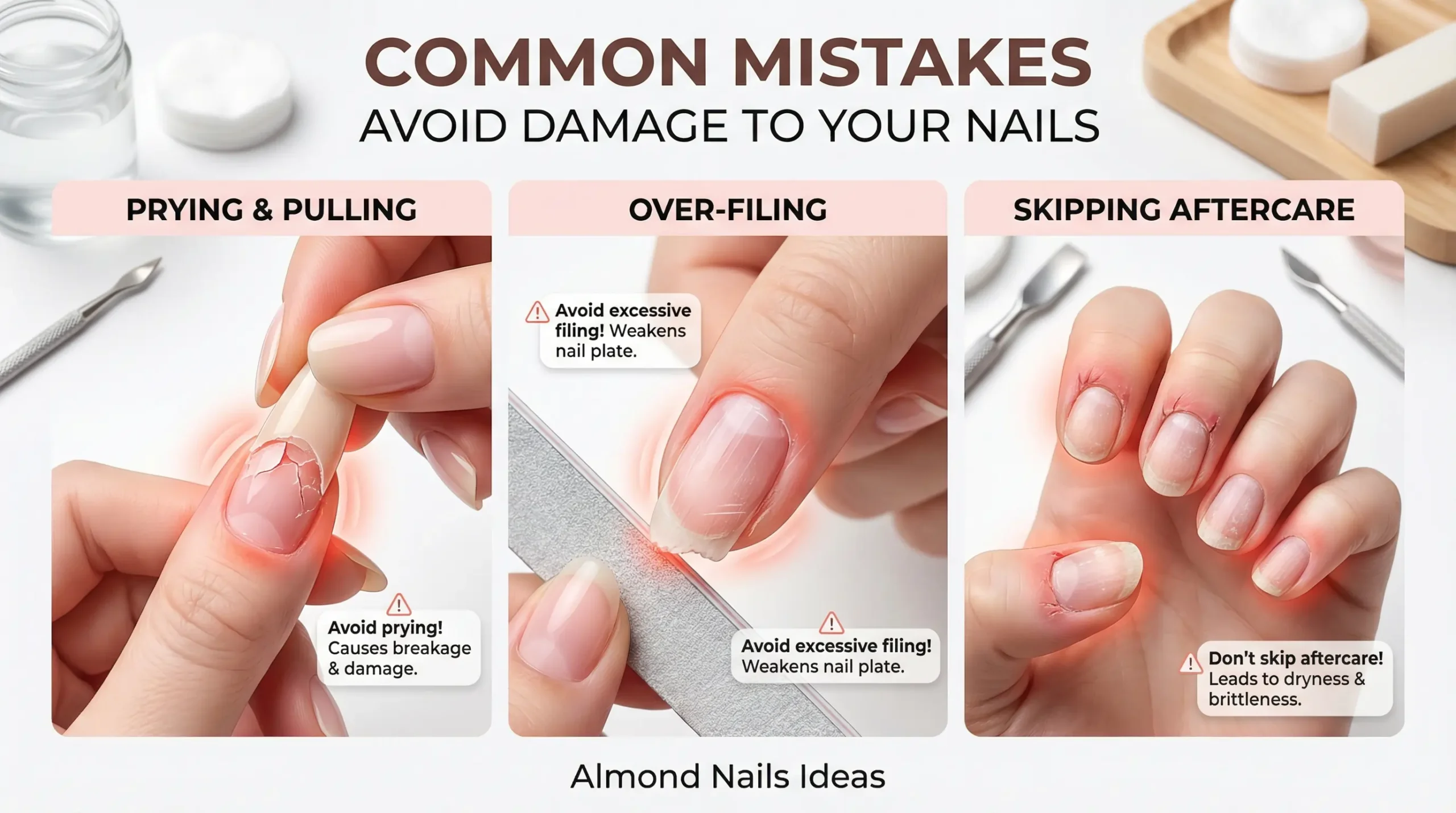
A major mistake in acrylic nail removal is pulling or prying the nails off. This can lead to nail breakage and damaged cuticles. Another error is over-filing, which thins the natural nails. Skipping aftercare can result in brittle nails or peeling. Always take your time and follow proper steps.
Remember, even a small misstep can lead to long-term nail damage. Many people forget to moisturize or use nail repair treatments afterward. Avoiding these mistakes keeps your nails healthy and reduces the chance of infections.
How to Care for Your Nails After Removing Acrylics
After removing acrylic nails, your natural nails need extra care. Apply cuticle oil daily to keep nails hydrated and prevent peeling. Using a strengthening nail polish can restore nail strength. Give your nails a break before applying a new set of fake nails. Eating a diet rich in biotin and vitamins also supports nail growth and overall nail health.
Many professionals recommend nail repair kits or weekly oil treatments. Massaging your nails and cuticles improves blood circulation and helps them recover faster. Proper aftercare ensures your nails remain beautiful and ready for future nail enhancements.
When to Seek Professional Help
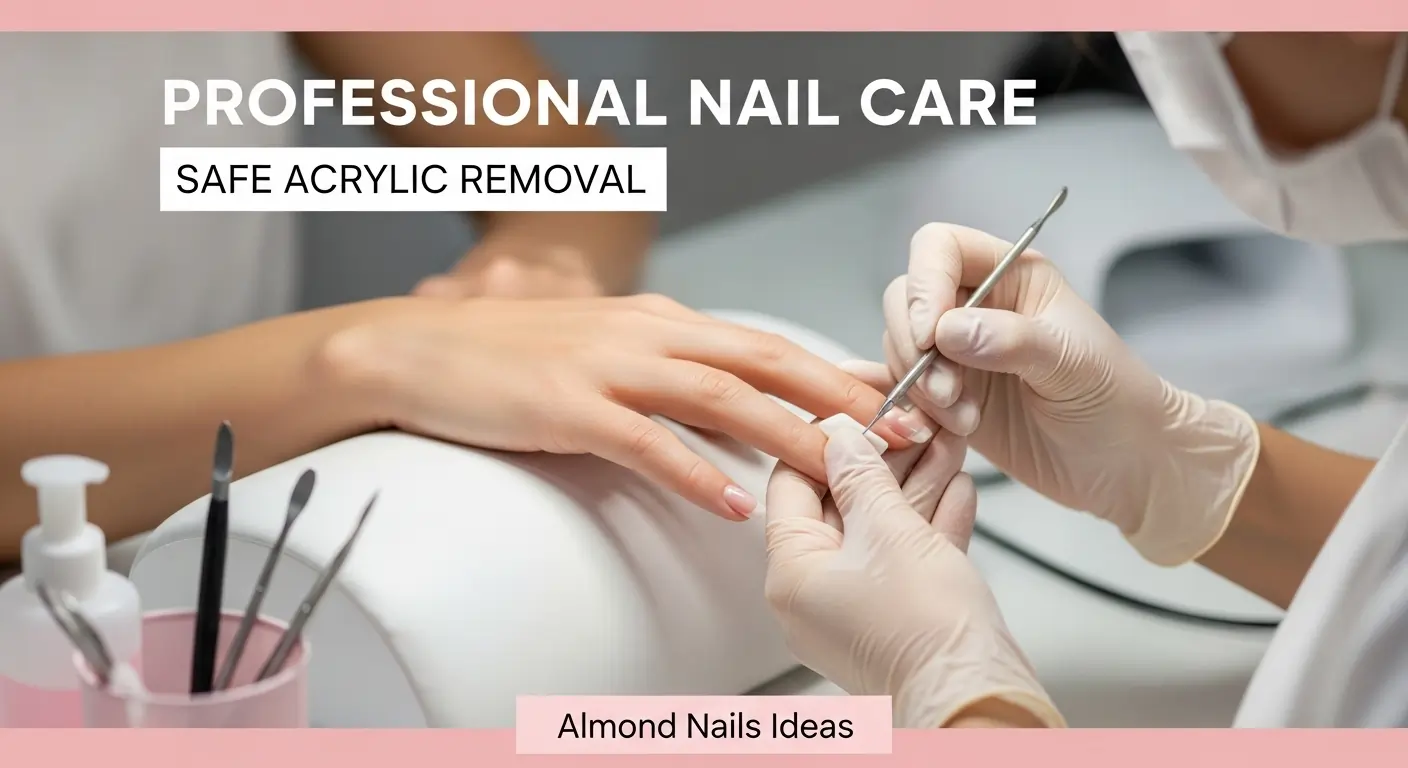
Sometimes, DIY methods may not be enough. If the acrylic is thick, stubborn, or your nails are weak, visit a professional nail salon. Nail technicians in the USA have the right tools and skills to remove acrylics without causing nail damage. Professionals also know how to treat infections or weak nails safely.
Seeing an expert is especially important if you notice pain, cuticle inflammation, or severe peeling. A professional ensures safe removal and provides advice for nail health. Many people find this investment worthwhile to avoid long-term nail problems.
FAQs
Learning how to remove acrylic nails safely is essential for maintaining strong and healthy natural nails. Using proper tools, taking your time, and following aftercare steps will prevent nail damage, brittleness, and peeling. Whether using acetone soak or natural methods, patience and care are key. Remember, when in doubt, consult a professional nail technician to ensure your nails stay beautiful and strong.
